


You’ve decided to renovate your bathroom. Maybe you’ve spent hours on Pinterest gathering ideas. Perhaps you’ve visited a few showrooms and know exactly what tiles you want. Now comes the part that actually determines whether your project succeeds or fails: finding the right people to do the work.
Pick the right team, and you’ll end up with a bathroom you love, finished on time with minimal stress. Pick the wrong one, and you could face delays, poor workmanship, surprise costs, and years of regret every time you step into the shower.
There’s no shortage of bathroom fitters, renovation companies and general builders ready to take on jobs in Dublin. The tricky bit is telling the professionals apart from those who leave problems behind. This guide explains what to look for, the questions to ask, and the warning signs that should make you walk away.
What to Look for in a Dublin Bathroom Company
Not all bathroom installers are created equal. Here’s what separates the good ones from the rest.
Bathroom Specialists vs General Builders
A general builder may be brilliant at extensions and loft conversions, but bathrooms are a different game: waterproofing, correct drainage gradients, ventilation, and electrical rules for wet areas. Those things demand specific experience that comes from doing bathrooms regularly.
Dedicated bathroom companies have seen every common issue, know which shortcuts to avoid, and understand which products hold up over time. They’ve usually built relationships with reliable suppliers. Their tilers specialise in bathroom tiling and their plumbers know modern shower systems and thermostatic valves.
Ask them directly: do you specialise in bathrooms, or is this one of many services you offer? The answer tells you a lot.
Full Turnkey Service
A complete bathroom renovation involves design, demolition, plumbing, electrical work, plastering, tiling, fitting sanitaryware, and finishing. Some companies handle everything themselves. Others subcontract various trades.
Neither approach is inherently wrong, but you need to know which you’re getting. If multiple subcontractors are involved, who coordinates them? Who takes responsibility if the plumber and tiler blame each other for a problem?
A single company managing everything from start to finish means one point of contact and clear accountability. That simplicity has real value when you’re living through a renovation.
Genuine Customer Reviews
Check Google, Facebook and other platforms for reviews. Look for patterns rather than single comments. One negative review among many positives might be an isolated case; repeated complaints about the same issue: delays, poor communication, unfinished work are a red flag.
Be cautious of businesses with only perfect five-star reviews and generic praise. Real customers usually mention specifics: how the team handled a problem, whether they finished on time, and how the project manager communicated. Google and Facebook reviews are good places to start.

Evidence of Previous Work
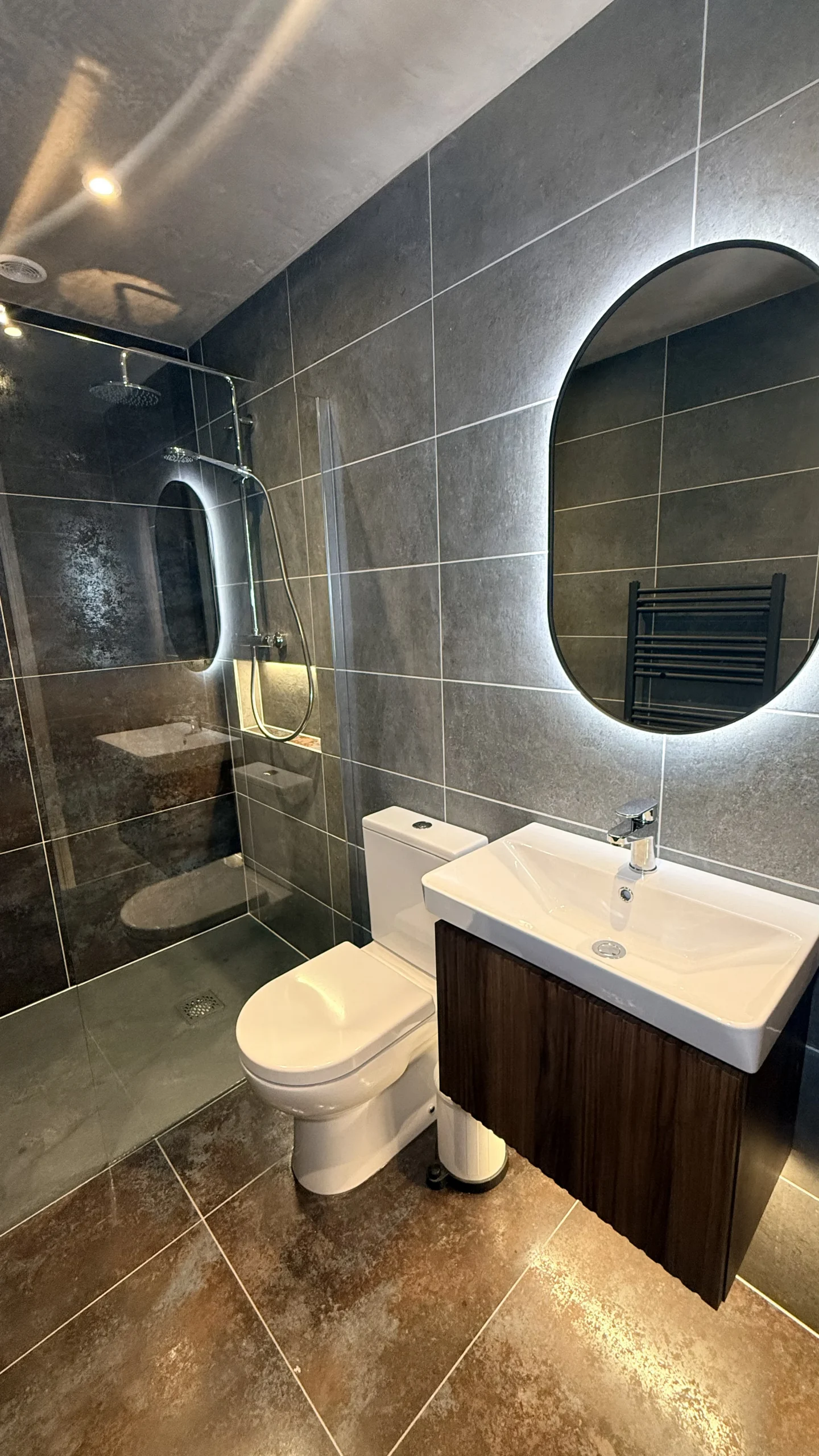
Any reputable bathroom company should be happy to show you examples of completed projects. Photos and videos on their website are a start, but ask if you can see projects similar to what you’re planning.
Look closely at the details in those images. Are the tile joints consistent? Are silicone seals neat? Is the grouting even? Those small details reveal the standard of workmanship to expect.
A Physical Showroom You Can Visit
Anyone can set up a website with pretty pictures. A showroom requires real investment. It tells you the company is established, serious about the business, and planning to be around for the long term.
More practically, a showroom lets you see and touch materials before committing. Tiles look different in person than on a screen. You can feel the weight of taps, see the finish on sanitaryware, and get a sense of build quality that photos simply can’t convey.
If a company doesn’t have a showroom, ask yourself why. Operating purely online keeps costs down, but it also makes it easier to disappear if things go wrong. Having a physical premises ensures you have somewhere to go if you have an issue with your bathroom. No location = no issue remedy.
Written Guarantees
Verbal promises mean nothing if something goes wrong two years later. Professional companies provide written guarantees on both workmanship and the products they install.
Ask what’s covered, for how long, and what the process is if you need to make a claim.
Manufacturer warranties on fixtures and fittings should be passed on to you.
Workmanship guarantees typically range from one to five years depending on the company. Get it in writing before work begins.
Insurance and Compliance
Public liability insurance protects you if something goes wrong on site, like damage to your property, injuries, or accidents affecting neighbours. Ask to see a current certificate.
Bathroom work is subject to building regulations, especially electrics in wet areas and any structural changes. A professional company will understand the rules and make sure the finished job is compliant. If they don’t know the regulations, walk away.

Questions to Ask Before You Commit
When you meet a potential bathroom company, come prepared with questions. Their answers will reveal a lot about how they operate.
1
How long have you been specialising in bathrooms? Experience matters. A company that’s been doing this for ten years has encountered and solved problems that a newer outfit hasn’t seen yet.
2
Can I see examples of similar projects? If you want a wet room and they’ve never done one, that’s useful to know. Ask for examples relevant to your specific project.
3
Do you handle all the trades in house? Knowing who actually does the work helps you know who’s accountable. Subcontracting isn’t necessarily bad, but you need clarity on how it’s managed.
4
What’s the realistic timeline? Vague answers like “a few weeks” aren’t good enough. You need specific dates for starting, key milestones, and completion.
5
What happens if problems arise after completion? Every company promises great service. Ask specifically how they handle callbacks and warranty issues. Do they have a process? How quickly do they respond?
6
What’s your payment structure? Staged payments tied to milestones are standard. A large deposit upfront (more than 20 to 30 percent) is a red flag. Never pay the full amount before work is complete, and you’re satisfied.
7
Are you local? How easy is it to get support when there is an issue? If the company is not local then you will find it difficult to get support for issues you have after paying.
Warning Signs to Watch For
Sometimes the best decision is walking away. Here are signals that should make you nervous.
No fixed business address. Operating from a mobile number and PO box makes it hard to track someone down if things go wrong.
Pressure tactics. “This price is only valid today” or “We have another client interested” are classic pressure moves. Reputable companies give you time to decide.
Demanding large deposits. Asking for 50 percent or more upfront is unusual and risky for you. Standard practice is a modest deposit with staged payments as work progresses.
Vague or verbal only quotes. If they won’t put details in writing, they’re leaving room to change things later. Insist on a detailed written quotation.
Reluctance to provide references. A company proud of its work will happily connect you with previous clients. Resistance here suggests something to hide.
Quotes significantly below everyone else. If a price looks too good to be true, it usually is: cheap materials, corner-cutting, underqualified workers, or plans to add extra charges later.
Promising you everything. There are companies who will promise you everything in order to get the sale. Always get multiple quotes to see what you are being offered and if one company is offering lots more for the same price or less this can be a warning sign.
Completing the job too quickly. If you get multiple quotes stating similar completion times but one provider is stating they can do it in half the time, ask yourself what are they skipping to complete the job so quickly?
The Case for a Turnkey Service
Some homeowners try to save money by managing the project themselves. They hire a plumber, then a tiler, then an electrician, coordinating schedules and hoping everyone shows up when promised.
That can work, but it’s stressful. You become project manager, responsible for sequencing trades, chasing people who don’t show up, and resolving disputes. If the tiler damages the plumber’s work, who pays? If there’s a delay, who adjusts everyone’s schedule?
A turnkey bathroom company takes that burden off you: one contract, one point of contact, one party responsible for the finished result. You describe what you want, approve the design, and they manage the complexity.
Yes, turnkey usually costs more than hiring trades separately. But you’re paying for coordination, accountability and peace of mind and for most Dublin homeowners, that premium is worth it.
Frequently Asked Questions
Should I use a bathroom specialist or a general builder?
For most bathroom renovations, a specialist is the better choice. Bathroom work involves waterproofing, ventilation, drainage, and electrical safety in wet areas. These require specific expertise that general builders may not have. Specialists also tend to have established relationships with bathroom suppliers, giving you access to better products and trade pricing.
How do I verify that a bathroom company is legitimate?
Start with basics: check they have a physical business address, not just a mobile number. Read reviews on Google and Facebook from multiple sources. Ask for references and actually call them. Request proof of public liability insurance. Confirm they provide written contracts. Any resistance to these requests is a warning sign.
What should a bathroom renovation quote include?
A proper quote itemises everything: all materials and fixtures, final labour cost, payment schedule tied to milestones, clear statements about what’s included and excluded and the price should include VAT. It should also specify who handles waste removal and making good any areas affected by the work. If a quote is vague or missing details, ask for clarification before signing. All quotations should be easy to read and transparent.
What if something goes wrong after the work is finished?
This is why written guarantees matter. A professional company will have a clear process for handling post completion issues. Ask about this before work begins. How quickly do they respond to problems? Who do you contact? What’s covered under their workmanship guarantee versus manufacturer warranties? Understanding this upfront saves stress later.
How long does a typical bathroom renovation take?
Most standard bathroom renovations in Dublin take between two and four weeks. Factors affecting timing include the scope of work, complexity of plumbing or electrical changes, drying times for waterproofing and tiling, and availability of your chosen fixtures. A reputable company will give you a realistic timeline before starting and communicate promptly if anything changes.
Making Your Decision
Don’t rush choosing a bathroom company. Meet a few options, visit showrooms, check references, and compare quotes properly. The cheapest option is rarely the best value. Look for a company that listens, answers your questions clearly, and gives you confidence they’ll deliver.
Trust your instincts, too. If something feels off in your conversations with a company, it probably is. You’ll be working closely with these people for several weeks, so mutual respect and good communication matter.
At Odyssey Bathrooms, we’re happy to answer any questions you have, whether you choose us or not. Visit our showroom in Nutgrove, Rathfarnham, Dublin 14, to see our work, discuss your project, and get a sense of how we operate. No pressure, just honest advice.
Give us a call. We’d love to hear about your bathroom plans.


