
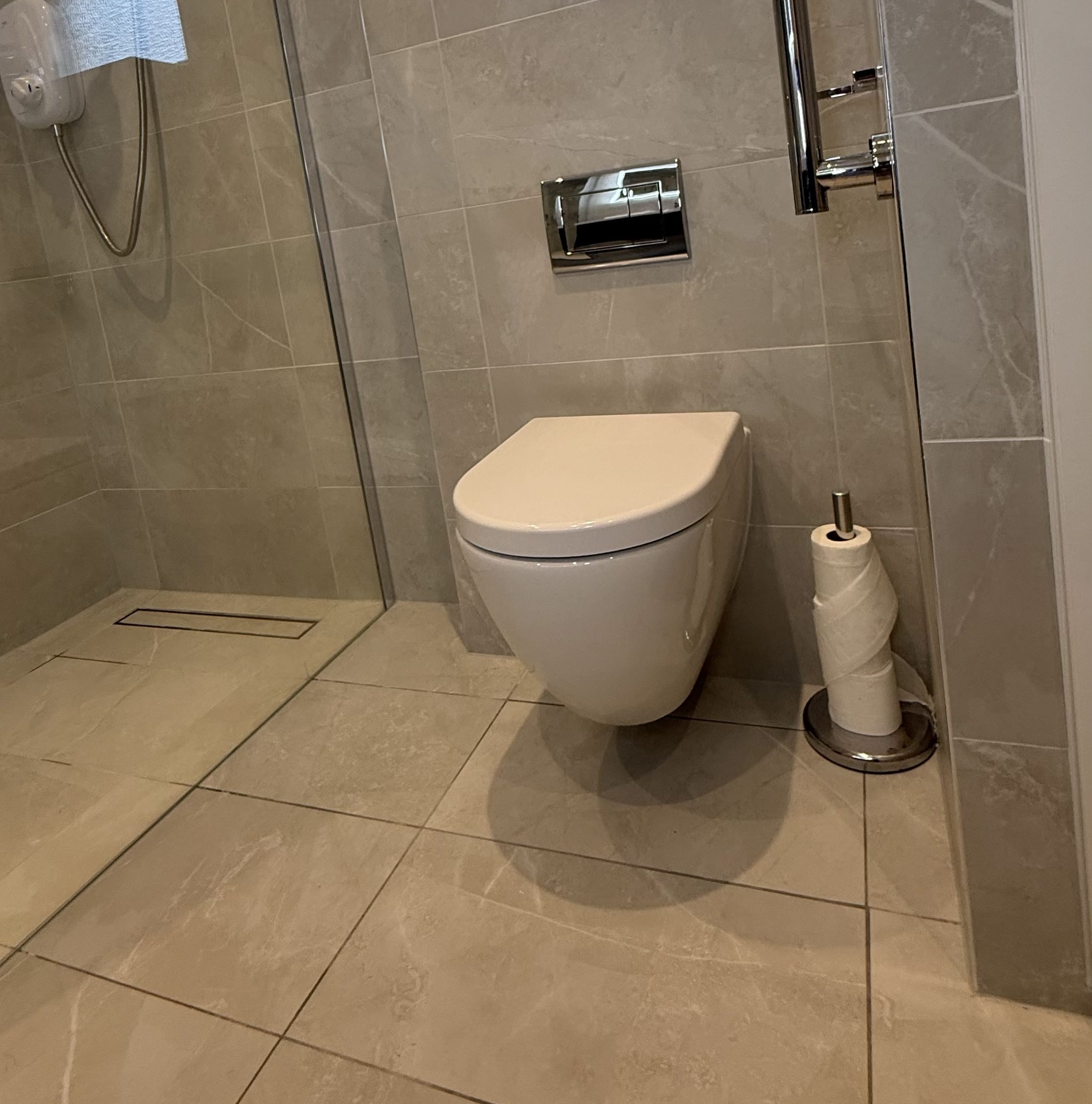

Walk into a wet room and you immediately notice the difference. There’s no shower tray to step over, no bulky enclosure breaking up the space, just clean lines and an open feel that makes even a modest bathroom feel like something from a boutique hotel.
Wet rooms have become increasingly popular in Dublin over the past decade, and it’s easy to see why. They work brilliantly in small spaces where a traditional shower enclosure would feel cramped. They’re perfect for anyone with mobility concerns who needs level access. And frankly, they just look fantastic.
But wet rooms aren’t just about aesthetics. Getting one right requires proper planning, quality waterproofing, and skilled installation.
This guide covers everything you need to know about wet rooms, from how they work to whether one would suit your home. We’ve installed wet rooms in properties across Dublin, from Victorian terraces in Rathmines to modern apartments in the Docklands, so we’ve seen what works and what doesn’t.
What Exactly Is a Wet Room?
A wet room is a bathroom where the entire floor area is waterproofed and designed to handle water. Instead of containing the shower in a tray or cubicle, the floor itself gently slopes toward a drain, allowing water to flow away naturally. The shower is simply part of the room rather than a separate enclosed space.
Think of it this way: in a standard bathroom, only the shower tray is designed to get wet. In a wet room, the whole floor can handle water safely. This opens up all sorts of design possibilities and makes the room feel much more spacious.
How Wet Room Construction Differs from Standard Bathrooms
The key difference lies in the waterproofing. A wet room requires what’s called tanking, which means applying a continuous waterproof membrane across the entire floor and up the walls to a certain height.
This membrane sits beneath your tiles and creates a completely watertight seal.
The floor also needs to be constructed with a gradient, typically around 1:80 or 1:60, sloping toward the drain position.
This fall needs to be precise. Too shallow and water pools on the floor. Too steep and it feels uncomfortable underfoot.
On a concrete floor, this gradient is usually created by screeding.
On timber floors (common in Dublin’s older houses), we use purpose built wet room former boards that create the slope while remaining lightweight enough for wooden joists to handle.


How Drainage Systems Work
Modern wet rooms typically use one of two drain types. Linear drains (sometimes called channel drains) are long and narrow, usually positioned along one wall or across the shower entrance.
They’ve become the most popular choice because they look sleek, allow for larger format tiles with fewer cuts, and the floor only needs to slope in one direction.
Point drains are the traditional circular type, positioned in the middle of the floor or in one corner.
The floor needs to slope from all directions toward this single point, which can mean more tile cuts and a slightly more complex installation.
That said, point drains work perfectly well, and some people prefer the classic look.
Why Choose a Wet Room? The Real Benefits
People choose wet rooms for different reasons, but a few benefits come up time and again.
They Make Small Bathrooms Feel Bigger
This is probably the biggest draw for Dublin homeowners, where bathroom space is often at a premium. Removing the shower enclosure eliminates a visual barrier that chops up the room. The floor tiles flow continuously from wall to wall, and suddenly that poky bathroom feels genuinely spacious. It’s remarkable how much difference it makes.
Accessibility Without Compromise
Level access is a game changer for anyone with mobility challenges. No step to navigate, no tray edge to trip over. Wheelchairs can roll straight in. For elderly parents or anyone planning to age in place, a wet room offers independence and safety without looking like a medical facility. You can have grab rails and a shower seat in a beautifully designed space that happens to be accessible.
Easier to Clean Than You’d Think
With no shower door tracks collecting grime and no awkward corners behind a shower tray, wet rooms are surprisingly easy to maintain. A quick squeegee after showering keeps things looking fresh. The continuous floor surface means you can mop the entire bathroom in one go. Less scrubbing around silicone seals, less fighting with glass cleaner on shower doors.
Adds Value to Your Property
A well designed wet room is a selling point. Estate agents know that buyers respond to contemporary bathrooms, and wet rooms signal quality and thoughtful design. Whether you’re planning to sell or simply investing in your home for the long term, a wet room is money well spent.
Design Flexibility
Wet rooms suit almost any room shape. Awkward alcoves, sloping ceilings in attic conversions, narrow galley bathrooms, they all work. Because you’re not constrained by standard shower tray sizes, you can position the shower wherever makes most sense for your layout.
Wet Room Ideas and Design Inspiration
The beauty of a wet room is how much creative freedom it gives you. Here are some design directions we’ve seen work brilliantly in Dublin homes.
Tile Choices That Work
Large format tiles are a natural fit for wet rooms. Fewer grout lines mean a cleaner look and (bonus) less grouting to keep clean. Porcelain tiles in 600x600mm or larger are popular, and some people go for dramatic 1200x600mm slabs that really make a statement.
That said, smaller tiles have their place too. Mosaic tiles or smaller format options provide more grip underfoot because of the additional grout lines. This can be important in the shower zone, especially for older users or families with children.
Whatever you choose, make sure the tiles are rated for wet areas and have adequate slip resistance. Your supplier can advise on the R rating (slip resistance rating) you need.
Glass Screens: Yes, No, or Maybe
Just because you have a wet room doesn’t mean you can’t have a glass screen. Many people choose a fixed panel of frameless glass to define the shower zone and contain most of the spray. It keeps the rest of the bathroom drier while maintaining that open, connected feel.
Full height screens (around 2000mm) provide maximum splash protection. Half height screens (typically 1000 to 1200mm) contain spray at body level while keeping the sightlines completely open above. And of course, you can skip the screen entirely for the ultimate minimalist look, though you’ll need good heating and ventilation to handle the extra moisture in the room.
Underfloor Heating: Almost Essential
We’d strongly recommend underfloor heating in any wet room. Because the whole floor can potentially get wet, you want it to dry quickly. A warm floor speeds up evaporation, reduces the chance of standing water, and makes the room far more comfortable to use.
Electric underfloor heating is straightforward to install during a wet room fit out and costs relatively little to run. In a small bathroom, you might be looking at a few cents a day. It’s one of those upgrades that seems like a luxury until you have it, then you wonder how you ever lived without it.
Fixture Choices
Rainfall showerheads are a natural pairing with wet rooms. Mounted from the ceiling or on a high wall arm, they reinforce that spa like feeling. Many people add a secondary handheld shower on a riser rail for everyday convenience.
Wall mounted toilets and basins work particularly well in wet rooms, keeping the floor clear and easy to clean. Concealed cisterns and built in storage add to that streamlined look.
How We Install a Wet Room
Wet room installation isn’t a DIY project. The waterproofing needs to be right, and there’s no margin for error. Here’s what the process typically involves.
Step 1:
Assessment and Planning
First, we need to understand what we’re working with. Is the floor concrete or timber? Where can the waste pipe run to connect with your drainage? What’s the ceiling height? Are there any joists or structural elements that affect where we can position the drain?
We’ll visit your property, take measurements, and discuss your design ideas. By the end of this stage, you’ll have a clear picture of what’s possible and what the installation will involve.
Step 2:
Preparing the Floor
Once the old bathroom is stripped out, we prepare the floor substrate. On concrete, this usually means laying a screed with the correct gradient toward the drain position. On timber floors, we install wet room former boards: pre shaped panels that create the necessary fall while keeping the floor height to a minimum.
Getting this gradient right is crucial. We use laser levels and careful checking to ensure water will flow exactly where it should.
Step 3:
Tanking (Waterproofing)
This is the critical stage. We apply waterproof boards and a liquid waterproof membrane across the entire floor and up the walls. The membrane is applied in multiple coats, with reinforcing tape at all corners and joints. It creates a continuous waterproof barrier that protects the structure beneath.
The membrane needs to extend far enough up the walls to contain any splash. In the shower zone, we typically tank right up to ceiling height. On other walls, at least 150mm above the finished floor level, though we often go higher for added protection.
Step 4:
Drain Installation
The drain is integrated into the waterproof system. Modern wet room drains have flanges that bond directly into the tanking membrane, creating a watertight seal. We connect the drain to your waste system, ensuring adequate fall on the pipework so water drains away efficiently.
Step 5:
Tiling
With the waterproofing complete and tested, we can tile the floor and walls. Tiles are laid using flexible adhesive that can handle the slight movement in the structure. Grout is typically epoxy based or a high performance cement grout that resists water penetration.
Step 6:
Fitting Out
Finally, we install the sanitaryware, shower fittings, glass screens, and all the finishing touches. The room gets a thorough clean, we run through everything with you, and your new wet room is ready to use.
Common Wet Room Concerns
People often have questions and concerns before committing to a wet room. Let’s address the most common ones.
Will Water Go Everywhere?
This is the number one worry, and it’s understandable. In practice, a well designed wet room keeps water pretty well contained to the shower area. The floor gradient directs water toward the drain, and a glass screen (if you choose one) stops most spray from reaching the rest of the room.
Even without a screen, water doesn’t travel as far as you might think. It follows the path of least resistance, which is toward the drain. Good ventilation helps dry any residual moisture quickly.
Is the Rest of the Bathroom Always Wet?
No, not if the room is designed sensibly. The shower area is typically at one end of the room, with toilet and basin at the other. Position your fixtures thoughtfully, and the dry end stays dry. We’ve had clients initially worried about this who now say they barely notice any difference from a conventional bathroom.
What About Cold Floors?
Underfloor heating solves this completely. The floor stays warm and comfortable, and any water that lands on it dries faster. Without heating, tiled floors can feel cold, but that’s true of any bathroom. In a wet room, we’d consider underfloor heating close to essential rather than optional.

Is a Wet Room Right for Your Dublin Home?
Wet rooms aren’t the right choice for everyone, and we’d never push one on a client who’d be better served by a different solution. Here’s how to think about whether a wet room makes sense for your situation.
A wet room might be perfect if:
- You have a small bathroom and want to maximise the sense of space
- Accessibility matters now or might matter in the future
- You love contemporary, minimal design
- You have an awkwardly shaped room that’s hard to fit standard fixtures into
- Easy cleaning is a priority
You might prefer a traditional setup if:
- You have young children and want to contain water completely
- Your bathroom has no window and limited ventilation
- You strongly prefer the feeling of an enclosed shower
Honestly, there’s no wrong answer here. It comes down to how you use your bathroom and what appeals to you.

Frequently Asked Questions About Wet Rooms
Can any bathroom be converted to a wet room?
Most bathrooms can be converted, yes. The main considerations are floor construction and drainage routing. Concrete floors are straightforward to work with. Timber floors (common in older Dublin homes) require specialist wet room former boards, but these are a well established solution. We’d need to check that your joists can handle the slight additional load and that we can route the waste pipe to your existing drainage. An initial assessment will confirm whether your bathroom is suitable.
Do wet rooms leak?
A properly installed wet room does not leak. The waterproof membrane (tanking) creates a continuous barrier across the floor and up the walls, completely protecting the structure beneath. Problems only arise when the tanking is done incorrectly, which is why using an experienced installer is so important. We’ve never had a leak on any wet room we’ve installed because we don’t cut corners on the waterproofing stage.
How long does it take to install a wet room?
A typical wet room installation takes approximately 2 weeks from start to finish. The exact timeframe depends on the size of the room, complexity of the work, and your tile and fixture choices. The waterproofing stage needs time for each coat to cure properly, and rushing this isn’t an option. We’ll give you a realistic timeline before we start and keep you informed throughout.
How much does a wet room cost in Dublin?
The cost depends on several factors: the size of your bathroom, your choice of tiles and fixtures, whether we’re converting an existing bathroom or starting from scratch, and the complexity of the installation. Every project is different. The best way to get an accurate figure is to arrange a consultation where we can discuss your requirements and provide a detailed quote. Get in touch or visit our showroom to start the conversation.
Ready to Explore a Wet Room for Your Home?
If a wet room sounds like it could work for you, the next step is a conversation. We’d be happy to talk through the possibilities.
Give us a call or arrange a showroom visit. We’d love to help you create a wet room you’ll enjoy for years to come.


