
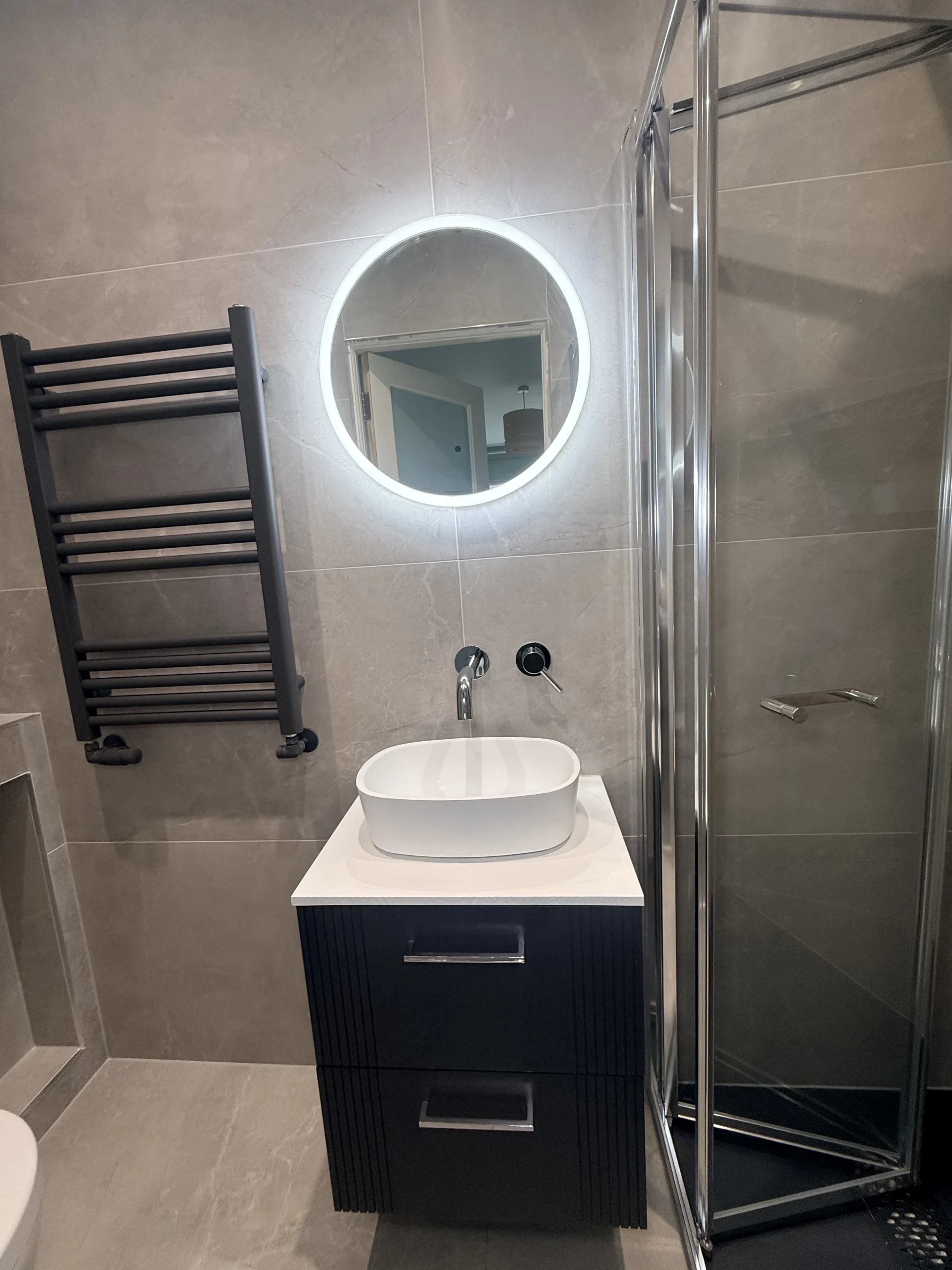

There is something irresistible about having a private bathroom just a few steps from your bed. An ensuite removes the morning queue for the shower, gives you a space that is truly yours, and adds a bit of everyday luxury. Honestly, who would not want that?
For homeowners across Dublin, adding or updating an ensuite is one of the most common renovation choices we see. Whether you are lucky enough to have a large master bedroom in a period house or are trying to squeeze a shower into a compact new build box room, the right design transforms the experience.
This guide walks through minimum sizes and space saving tricks, current design directions, and practical must dos. We have installed ensuites all over Dublin, from Rathgar townhouses to Malahide family homes, so you will find practical, real world advice here.
What Is the Minimum Size for an Ensuite Bathroom?
A practical minimum for an ensuite that includes a toilet, basin and shower is about 1.5 metres by 2 metres, roughly 3 square metres of floor area. It is snug, but perfectly usable.
If you want a roomier feel, plan for at least 2 metres by 2.5 metres, about 5 square metres. That extra space gives you breathing room, makes layouts easier, and helps the bathroom feel less claustrophobic.
A Few Practical Notes About Space:
- Building regulations set minimum clearances around toilets and showers for safety. Your installer will be across these requirements.
- Door swing matters. An inward opening door uses up precious floor area, so consider a sliding pocket door or an outward opening option if space is tight.
- Ceiling height can be an issue in attic conversions, so make sure there is enough headroom above the shower.
We have turned spaces that looked impossibly small into very usable ensuites. It is mainly about smart planning and choosing the right fittings.

Small Ensuite Bathroom Ideas That Actually Work
Small does not need to equal compromise. Some of our most striking ensuites were created in compact footprints where every centimetre counted.
Wall Hung Everything
Wall hung toilets and basins are one of the easiest ways to free up space visually. When you can see a bit of floor beneath the fixtures, the room feels more open, and they are easier to clean too. Modern installations use a supportive frame behind the wall, which a good bathroom fitter will arrange without drama.
Ditch the Shower Tray
A wet room or walk in shower with a frameless glass screen is a revelation in a small ensuite. Removing a bulky tray and enclosure lets the floor run straight through the shower, so the room reads as one continuous space rather than several cramped zones.
Think Vertically
If the floor area is limited, go up. Tall mirrored cabinets, recessed niches in the shower, and high storage units make good use of vertical space without stealing the footprint. A full height mirror or mirrored tiles can double the perceived size of the room.
Large Format Tiles
It might sound odd, but large tiles usually work better in tight bathrooms. Fewer grout lines mean less visual noise. A 600mm x 600mm tile, or larger, often gives a cleaner, more expansive feel than many small tiles with busy grouting. Using the same tile on floor and walls, or sticking to the same colour family, helps the room feel larger.
Corner Fixtures
Corner basins and quadrant showers have their place. They tuck into awkward angles and release floor space in the main area of the room. Do not dismiss them, they can be a clever solution.
Ensuite Design Trends for 2026
Trends shift, but right now the direction is towards timeless, warm design rather than faddish colours. Here is what Dublin homeowners are asking for at the moment.
Warm Neutrals Taking Over
We are seeing a move to warmer neutrals such as soft beiges, warm taupes, terracotta hints, and earthy greens. These tones feel more welcoming first thing in the morning and work well with natural light, which Dublin can be short on.
Textured and 3D Tiles
Flat tiles are being swapped for texture and relief. Ribbed tiles, wave patterns and three dimensional surfaces add interest without loud colours. They work especially well as a feature behind a basin or in the shower.
Moving Beyond Chrome
Chrome is a classic, but more clients are choosing alternatives. Brushed brass, brushed gold, matte black and brushed nickel are all popular and can bring warmth and personality. Mixed metals are on the rise too, and when done with restraint they look great.
Statement Lighting
Bathroom lighting has become a design element. Pendant lights over freestanding baths, LED mirrors with adjustable colour temperature, backlit niches, and even chandeliers in larger ensuites are all appearing more often. Just be sure any fitting used in a wet area is appropriately rated, and your electrician will advise on safety.
Underfloor Heating
Underfloor heating has shifted from luxury to near essential in ensuites. Stepping onto a warm floor on a cold Dublin morning feels like a small daily treat. Electric systems are relatively affordable to install and cheap to run in a small room.
Ensuite Layout Options
Your layout will depend on the room shape, door and window positions, and where plumbing can be accessed, but some patterns tend to work well.
The Linear Layout
In a long narrow room, lining fixtures along one wall is often most efficient. Toilet, basin and shower in a row keeps the opposite wall clear, makes the space feel wider, and simplifies plumbing runs since everything connects on the same wall.
Positioning the Shower
If you can choose, put the shower at the far end of the room away from the door. It draws the eye through the space and contains the wet zone. Showers by the door can make the entrance feel cramped and risk splashes into areas you would rather keep dry.
Where’s the Window?
Natural light and ventilation are invaluable. Keep windows unobstructed where possible. If a window sits inside the shower, a fixed frosted pane works well, just ensure your waterproofing is up to the job.
Essential Features for Your Ensuite
Good design is not just about looks. There are practical elements that make the difference between a bathroom that works for years and one that causes problems.
Ventilation: Do Not Skimp Here
An ensuite sits right next to your bedroom and produces a lot of steam. Without proper extraction you risk condensation, mold, and damage to bedroom fabrics and furniture. Install a decent extractor fan, ideally one with a humidity sensor so it runs only when needed. Even with a window, mechanical extraction is still important.
Waterproofing
Do not cut corners on waterproofing. Correct tanking in shower zones and around baths protects the ensuite and any rooms underneath. We have seen cases where poor waterproofing led to damp patches appearing on ceilings months later, which is costly and avoidable.
Lighting That Works
You need layered lighting. Task lighting at the mirror, ideally from both sides to avoid shadows, general ambient lighting, and perhaps a dimmer for late night use. One single bright ceiling light is rarely enough and can create harsh shadows.
Sound Considerations
Because the ensuite shares a wall with the bedroom, consider noise. Add insulation in the partition, choose a quiet extractor fan, and fit soft close toilet seats to avoid midnight slams. Small details make shared spaces more peaceful.

Frequently Asked Questions About Ensuite Bathrooms
Does adding an ensuite add value to your home in Ireland?
Yes, and often more than people expect. Estate agents commonly estimate that a well designed ensuite can add between 3 and 5 percent to a property’s value. On a Dublin house that can translate to tens of thousands of euros. Beyond the numbers, properties with master ensuites tend to sell faster, as buyers now expect them in family homes.
Can I fit an ensuite in a small bedroom?
Almost certainly, but you need realistic expectations. A shower room with a toilet and basin can fit into about 1m by 2m. The key question is whether losing that bedroom space leaves the sleeping area too small. As a general guide, bedrooms of around 6 square metres can usually spare an ensuite and remain comfortable. We are happy to visit and advise on what is practical.
Do I need planning permission for an ensuite in Ireland?
Converting existing internal space into an ensuite is treated as an internal alteration and does not usually require planning permission in Ireland. However, building regulations still apply, especially for ventilation, electrical safety, and any structural work if you move or add walls. A professional installer will ensure everything meets the required standards.
How long does it take to fit an ensuite?
For a straightforward fit out in an existing space, expect about one to two weeks from strip out to handover. If you are adding partition walls, running new plumbing and electrics, or installing underfloor heating, it can extend to two or three weeks. A contractor should give you a clear timeline before starting and keep you informed throughout.
What's the difference between an ensuite and a Jack and Jill bathroom?
An ensuite is accessed only from one bedroom and is private to that room. A Jack and Jill bathroom has two doors and is shared between two bedrooms, often in family homes where two children’s rooms share access. Each works well in the right context, depending on household needs.
Can I have a bath in an ensuite?
Yes, if you have the space. You will usually need around four square metres to comfortably fit a bath alongside a toilet, basin, and possibly a shower. In smaller ensuites most people choose a shower only layout for everyday practicality. If a bath matters to you and the room allows, there is no reason not to include one.
How much does an ensuite bathroom cost?
Costs vary depending on the size of the ensuite, the fixtures and finishes you choose, and the complexity of the work involved. Every project is different, so the best approach is a consultation where the installer can understand your requirements and provide an accurate quote. You are welcome to get in touch or visit our Rathfarnham showroom to discuss your ideas.
Ready to Create Your Perfect Ensuite?
Whether you are starting from scratch or updating an existing ensuite, the first step is understanding what your space can realistically accommodate. We offer consultations where we assess the room, talk through your ideas, and suggest layouts, fixtures, and finishes that suit your home.
We manage everything from initial design to the final reveal, including plumbing, electrics, tiling and finishing details. One team, one point of contact, and no chasing multiple trades.
Give us a call to book a consultation or arrange a showroom visit at our Rathfarnham location. We’d love to help you create an ensuite you’ll enjoy for years to come.


